Analyst
The Analyst is the chat surface. You describe what you want in plain language and it works against your own connected data — reading your indexed schemas, writing SQL, and offering to save what it produces as a data step.
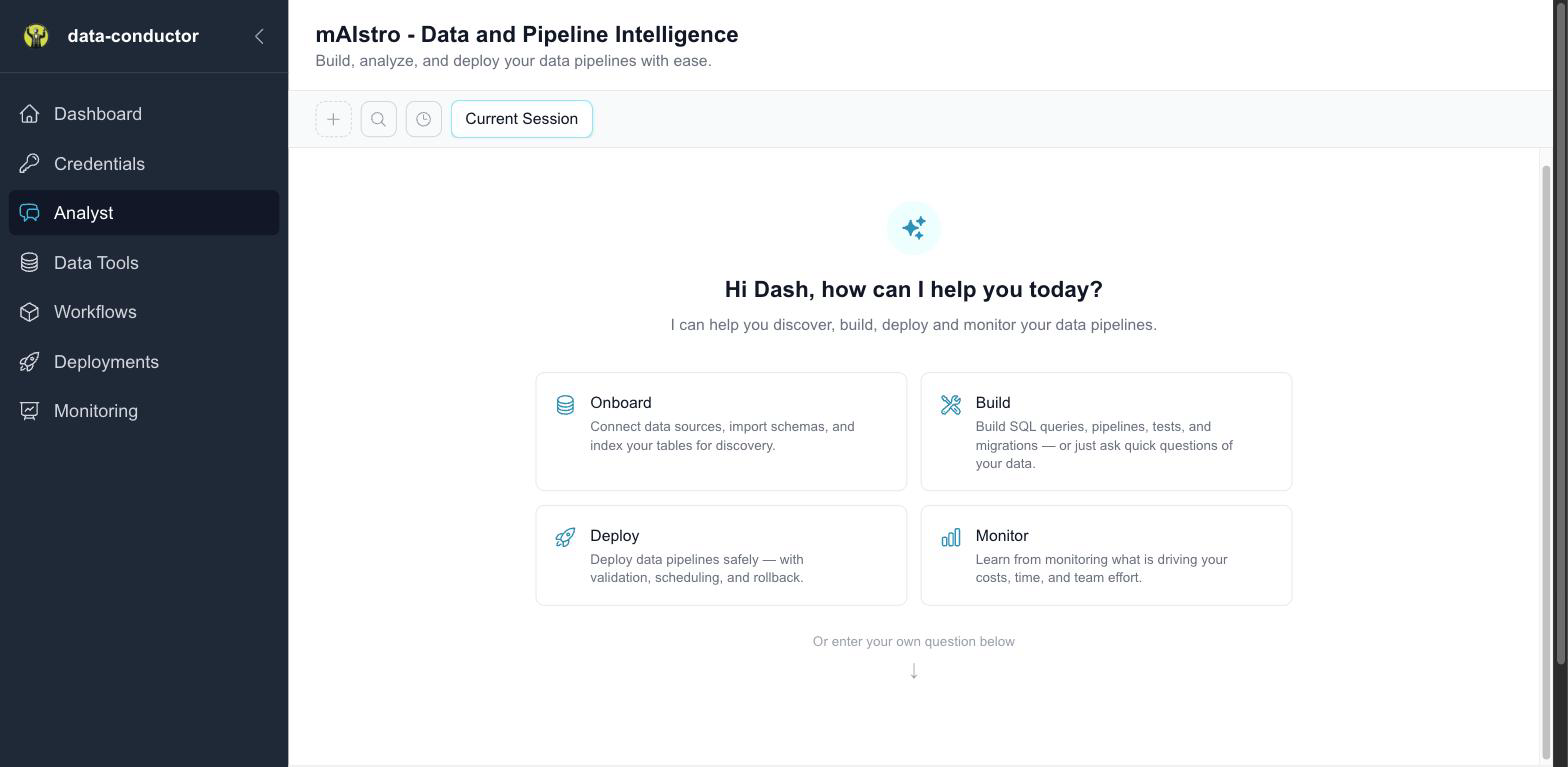
It's the fastest way to get from a question to something you can schedule.
Starting a conversation
Analyst in the sidebar. Sessions are listed alongside the chat; each keeps its own history, so a conversation about last quarter's reporting stays separate from one about a migration.
What it can do
- Answer questions about your data, by writing and running SQL against a connection you've authorised.
- Explain your schema — which tables exist, what a column means, how two tables relate.
- Draft a data step and save it, so a query you arrived at in chat becomes something you can version and schedule.
- Build toward a pipeline, escalating from a rough idea to a concrete proposal to validated SQL.
Grounding
The Analyst reasons from your indexed schemas rather than guessing at column names. The better Schemas is populated — especially column descriptions — the more accurate it is. If it seems to be inventing columns, that's usually the signal that a source hasn't been indexed.
What I know / what I need
On multi-step work it states what it has and what it's missing rather than proceeding on assumptions. When it says it needs something — a connection, a date range, which of two similar tables you meant — supplying it is faster than letting it guess.
Saving its output
SQL the Analyst produces isn't automatically part of your platform. Results come with a Save action that creates a proper data step, at which point it picks up versioning, environments and everything else.
Accountability
Every action the Analyst takes is recorded. See the Audit Trail for what ran, who asked, and what it cost in tokens.
Related
- Schemas — what grounds its answers
- SQL Data Steps — where its output lands